• As a 50th birthday treat, I was given a weekend away in Bath – a perfect little escape for an October weekend. We set off on Saturday morning and stopped at Avebury on the way down. We’ve been before and remembered it as a nice little place to stretch our legs.

    Avebury is one of those rare spots where you can actually walk among the ancient stones. The stone circle there is even larger than Stonehenge – it’s thought to have been built around 2600 BC and surrounds much of the village itself. Managed by the National Trust, it has a peaceful charm and plenty of open space. We wandered around for a bit, enjoyed the sunshine once the rain cleared, and made good use of the café.

    We carried on, driving through Bathford – another lovely little village – before reaching Bath. We’re staying at https://graysbath.co.uk/rooms, which is absolutely gorgeous. From the car park, we can see the Royal Crescent – yes, the Royal Crescent – glowing in the sunlight. We’re on the shady side of the valley, but when the sun hits that row of Georgian houses, it’s just beautiful.

    Our room is quaint and could be described as shabby chic – every room here has its own en-suite. It’s very comfortable, with just the right mix of character and calm.

    Bath – view of the city

    Saturday evening

    Once we’d settled in, we decided to walk into Bath itself. We were told it was about a ten-minute stroll down into town, which felt about right – though the walk back definitely took longer. Uphill all the way, it felt more like twenty-five minutes!

    In the city, we wandered around to get our bearings and soak up the atmosphere. Bath is such a beautiful place to just amble through – every corner seems to have another bit of history tucked away.

    We managed to get last-minute tickets to the theatre and saw Death on the Nile. It was absolutely fantastic – we both really enjoyed it. The moving scenery made it feel fresh and exciting. We were sat up in the upper circle, and at first I thought my view might be blocked a little by a corner, but the whole play was cleverly staged across two levels. In the end, we were almost eye level with the action, which made it even better.

    Sunday

    Sunday was a pretty lazy day, just how we wanted it. We headed over to Chelsea Road in Bath – known for its vintage shops, antiques, and charity finds. Not everything was open, but it was still lovely to wander, browse the windows, and take our time. I even managed to pick up a few Christmas gifts, which made me very happy.

    Later, we walked along the Royal Crescent and popped into the museum there. It was absolutely fascinating. I loved how the technology was cleverly hidden in pictures, mirrors, and furniture – it brought the whole experience to life. At one point, it felt like people were actually chatting around the dining table. The “gentleman’s boudoir” upstairs was especially well done, complete with a mirror that came alive with stories.

    What really stayed with me, though, was how the museum balanced everything. It didn’t just show how people lived, but how society worked – especially around trade, politics, and the choices people made. The section about the sugar boycott was particularly powerful. Women couldn’t vote at the time, but they could still make a difference by refusing to buy sugar produced through slavery. It was a clever and quiet kind of protest that hit the profits of those involved in the trade and made people take notice.

    The skies were kind to me when taking this photo and had a moody dance to add ‘atmosphere’

    Monday

    Day three – came around far too quickly. Time to check out of our lovely B&B after another great breakfast. It was so nice yesterday that I had exactly the same again today. I’m not sure I need to eat for a week! Breakfast was served in a beautiful room and everything was so thoughtfully done. I’d definitely recommend Grey’s Boutique to anyone visiting Bath – the quality and service were excellent.

    After packing up, we headed to Charlotte Street Car Park and had a bit of fun trying (and failing) to charge the car. In the end, we gave up and went old-school – parked the car and carried on with our plans.

    Our final stop was the Thermae Bath Spa. We were booked in for 2 p.m. but asked if we could go in a bit earlier, and they were so accommodating. It was absolutely worth it – not too busy, just the right balance of calm and people-watching. The water there is fascinating – it started out as rainfall more than 10,000 years ago, seeped three kilometres underground, and now rises back up at around 45 °C. They have to cool it down before we can use it!

    We started at the open-air rooftop pool, which looks right over the city – an incredible view. Then we worked our way down through the spa’s different levels. There was an ice room (very useful to cool down after being in the steam room), steam rooms, an infrared sauna, and a chill-out room with warm beds and twinkling stars on the ceiling.

    Down on the lower ground floor was another pool – calmer and more atmospheric, with a lazy river winding through it. Phones are locked away while you’re there, which keeps the atmosphere peaceful and private. It’s also quite clever marketing – no one can take photos, so you just have to go and experience it for yourself.

  • So long Copenhagen.
    What a delightful, clean city full of charm and charisma.

    This was the start of our return journey – leaving Copenhagen train station to head for Berlin, then picking up the sleeper train to Brussels and arriving just in time to take the Eurostar back to the UK. The journey from Copenhagen went via Hamburg, giving us one last chance to watch the scenery change as we crossed back through Germany. And all trains through Germany went smoothly – leaving us with just the final UK leg to complete.

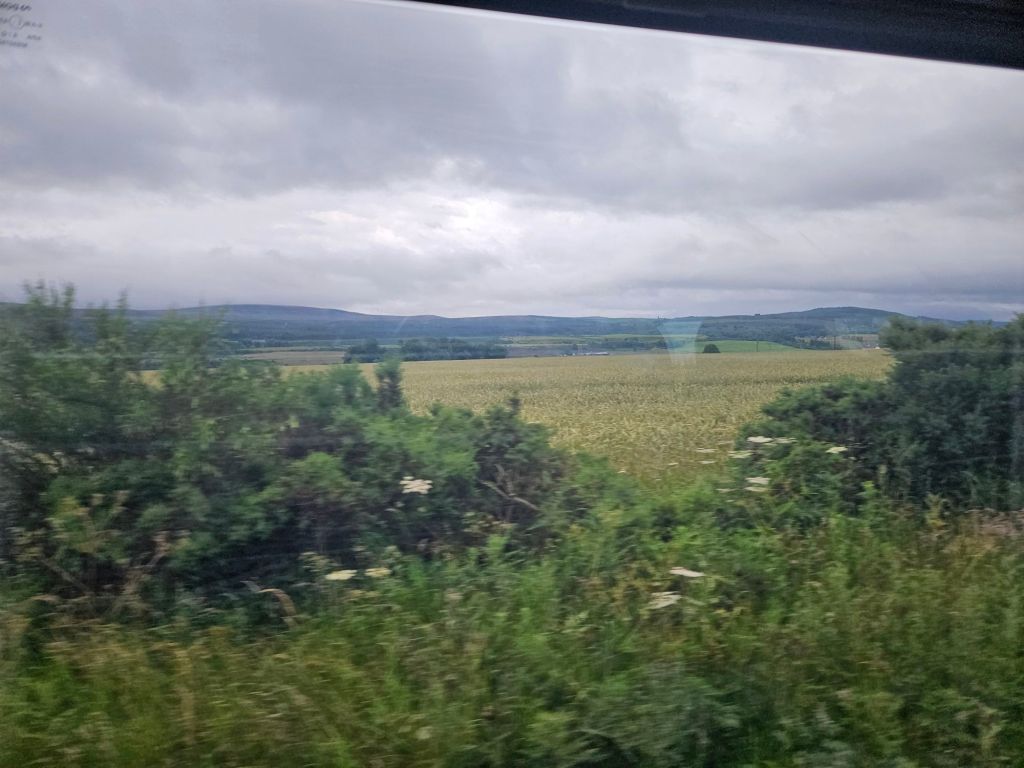
    The gentle rolling scenery between Copenhagen and Hamburg

    Reflections on a final day…
    If you’d asked me a year ago what I would find so exciting about this trip, I don’t think I could ever have anticipated the answer. The planning became half the fun – sketching out routes, waiting for booking dates to open, and securing our trains. That sense of anticipation carried us right through to the moment we set off.

    Leaving on that very first day, I wasn’t sure how things would pan out – but I was truly excited for the journey ahead. We’ve seen and done so much, and soon came to realise that travelling by train was as much a part of the adventure as the places themselves – offering moments of rest, reflection and watching the world roll by.

    We sat to chat amongst the four of us about our favourite day or places during our trip. I think it’s safe to say that the answer was that we didn’t have one particular moment that jumped out. Each day has been so different in its own way that we don’t have a favourite.

    We have stayed in four apartments, each with their own character and charm – from the clean, modern lines in Berlin to the hikers’ cabin complete with a mixed set of crockery, from managing with a composting toilet to the luxury of two bathrooms. We also stayed in one hotel – a rescue from a near disaster, made easier by the effortless cancellation of our booked accommodation.

    Each city carried its own character too, shaped by time and history. It reminded me that I am not just one person from one place, but part of something bigger – as humans we come from all over, sharing the same history. We should remember the horrors, celebrate the successes, and work towards living more sustainably together.

    We’ve carried four backpacks and used or worn every item we brought with us – with the single exception of our waterproof trousers. I would never recommend leaving them behind though. If that was the only thing we didn’t use, then I’d call it a good insurance policy and well worth the little bit of extra space.

    We have been away celebrating an 18th birthday, our 25th wedding anniversary, and my upcoming 50th for 18 days. During this time we’ve covered 2,730 miles by train, 570 nautical miles by sea, and driven 225 miles – and we’ve lost count of how many buses, trams and tubes or even steps that we’ve taken.

    That’s 413 hours away – and WE. ENJOYED. EVERY. SINGLE. MINUTE. OF. IT. All 24,780 of them.

  • Our apartment is on the ground floor of a six-storey building – no lugging bags up endless stairs. It’s neatly placed equidistant between two metro stations, giving us options each time we head out to explore. This is also the first time we’ve stayed somewhere with a bed to convert – a little novelty for us.

    Bag drop ment one thing – all four landed on the one bed, but it meant we could sit in the sofa.

    It isn’t a studio either, which makes it feel more spacious, and even comes with a small study tucked under the stairs. I imagine students make this their home during term time, and we’re lucky to be here in the quieter spell before they return.

    Over 20,000 steps have been clocked up by each of us today – no wonder our feet are tired. Our average won’t dip though, as the next couple of days will be spent sitting back and watching the world go by on the train.

    We picked up the hop-on hop-off bus again today, but this time followed a different route. The highlight was pausing at the street food area in Copenhagen – the perfect spot to graze, rest and soak up the atmosphere. This was a sharp contrast to the street food in Oslo. The concept was the same, but here every corner of the world was represented – the English offering was fish and chips, alongside Kurdish dishes, Mexican, American and even Canadian food. All of it served from converted cargo containers, perfectly in line with the Danish ethos of reuse. The backdrop was the city’s recycling centre, and diners could eat alfresco if they weren’t too distracted by the bungee jumpers leaping overhead.

    Converted containers provide the kitchen areas for various street food vendors.
    There were rows of vendors all selling different styles of food.

    We ate with a view across the docklands, watching the cruise ships that had docked for the day and the seaplanes taking off and landing on the water.

    The kids were keen to visit the Lego store – fitting, given Denmark is the home of Lego. Tempting as it was to go wild, baggage limits meant souvenirs had to be small and preferably flat. In the end, keyrings and a couple of Lego characters won the day – just the right size to squeeze into our bags without breaking the zips.

    Charlie made me a mini me – we wanted a backpack but as one wasn’t available  she had to improvise. Just imagine this pot contains Chai.

    We ended our evening at Tivoli Gardens – one of Copenhagen’s top attractions and a magical way to round off the day. I won’t say I didn’t enjoy it, but it’s fair to admit that it didn’t quite live up to my expectations, or more accurately, my memories of it. Places change, progress moves on, and over time the gardens have been reduced. The old wooden rides that once gave Tivoli its unique charm have been replaced with towering steel roller coasters for the thrill seekers. The lakes are now hemmed in by shops with inflated prices, all on top of the entrance fee, and at the heart of it all is a grand concert stage with music loud enough for the whole city to hear.

    Tivoli Gardens

    I remember it differently – a park of old-style rides and soft twinkling lights in the evening. Maybe it’s just that I’ve grown up and the magic doesn’t quite sparkle the same way. But I think I’ll choose to hold on to the memories of Tivoli as it once was, if it’s all the same. That being said, it didn’t spoil the evening for the others, who were seeing Tivoli for the first time. We ended the night watching what I’m fairly sure was a Pierrot and Harlequin performance – which, without any context, only made it feel more bizarre than classic. Still, at least there was no language barrier to get in the way.

  • We arrived at our last stop – Copenhagen. The city greets us with colour and energy at every corner. It feels both old and new – rebuilt through the centuries yet still fresh and alive. There’s a sense of care here too. Copenhagen is a city that takes the environment seriously, weaving cycling, green spaces and clean living into daily life.

    After dropping our bags, we made our way to the centre and wandered along the harbour side. Each building stood in its own bright colour, lined up like a row of paints across the water. The sunshine made them shimmer, and the whole place felt alive with movement and warmth. Cafés spilled out onto the street, boats rocked gently in the water, and it was the perfect first glimpse of Copenhagen life.

    The vibrant harbour front of Copenhagen

    We took the river cruise as part of the hop-on, hop-off system and listened as the story of Copenhagen unfold. The city has been transformed with each leader since the 1600s, rebuilt and reshaped after fires, wars and changes in vision. From colourful houses to grand palaces, and later modern harbour districts, every chapter of leadership has left its mark on the city we see today.

    Today, Copenhagen focuses on the health of its people and on sustainability. Cycling is second nature here, with bikes welcomed on every street and corner. Even the recycling centre is more than just practical – it doubles as a hub for leisure. Inside there’s a snow zone, the highest climbing wall in Europe, and of course a viewpoint where you can take in the city from above.

    The recycling centre of dual purpose – Copenhagen

    Sitting in front of the recycling centre are also repurposed shipping containers. Converted into accommodation, they provide living quarters for the city’s students and again show the ethics of the city – reuse, sustainability, and finding creative solutions for modern living.

    Comfortable,  sustainable and recycled? What is there not to like?

    As we disembarked, we also noticed sea bins in the harbour. These floating devices act like underwater rubbish bins, drawing in plastic, oil and debris to help keep the water clean. Another small but clever way Copenhagen looks after its environment.

    The little Mermaid, full bodied – and iconic symbol of Copenhagen

    One of the most popular sights here is the Little Mermaid. I’ve seen her before – though last time she looked a lottle more green and was missing an arm. That arm had been sawn off by vandals but was later returned, just not reattached before my visit. She has also been decapitated more than once, but each time lovingly restored as the much-loved icon of the city. The irony of all this vandalism is that in Hans Christian Andersen’s original story, the only thing the mermaid grew was a pair of legs-and those have never been tampered with.

    We returned to our apartment for the evening, passing a Netto store on the way. I’ve always thought of Denmark as being expensive-but this time, shopping for food for an evening meal felt surprisingly close to home in terms of cost. Eating out, though, is definitely more costly, helped along by a 25% VAT on restaurant meals and cafés.

    At first, I wasn’t sure-everything seemed like such good value. Then I remembered that in Norway I’d spent a whole week converting 100 NOK to about £7. Now, using Danish krone, 100 DKK is closer to £12. It was a subtle shift, but one I could really feel as we settled into our first shop here.

    When we were shopping, we couldn’t remember if we had a full oven or not-so we played it safe and opted for salad and cold meats. We even tried looking up the facilities online while in the shop, but that didn’t give us much of a clue either. Sure enough, we did have an oven – and had a laugh about it as we thought how nice it would be to add eggs and some freshly boiled potatoes to the meal. The only snag was the kitchen came with just one saucepan, so it turned into a showdown: potatoes or eggs? And yes – you’ve guessed it -the potatoes won. The eggs will just have to wait their turn.

    With the potatoes we thought we’d add some butter we’d recently purchased. We were quite chuffed with ourselves for picking what we thought was the smallest block – a perfect size for a family of four staying just two days. Only later did we discover our clever shopping wasn’t quite so clever after all.

    Error, this 2 inch cube block was perfect size butter block for our short visit!

    It wasn’t butter – it was baker’s yeast. So instead of a creamy topping for our potatoes, we were all set up to bake bread for an army and even had the oven to do so!

  • We left our flat this morning after an easy checkout and as we stepped outside, we noticed a small brass square set into the pavement. It stopped us in our tracks. These are the markers that remember Holocaust victims – placed where they once lived. The family linked to our apartment were taken and died in Auschwitz.

    We’d seen many of these Stolpersteine stones in Berlin, each one a stark reminder of families torn from their homes. So it was striking to spot one in Oslo too, right outside the flat we’d just left. A small brass square in the pavement, marking names of those who had once lived there and who later died in Auschwitz. I don’t think I’ll ever be blind to these again. Wherever we travel, I’ll be looking out for them – and perhaps that’s exactly the point. They’re not just markers in the ground, but a living memorial, there to keep memory alive so such horrors are never repeated.

    We travelled down to the port side and made use of a storage locker for our bags. The lockers are deceptively spacious – we managed to squeeze in three out of our four bags without any trouble. Even a large wheeled suitcase would fit. The cost was a whopping £4.37, and worth every penny for the freedom it gave us to wander unencumbered.

    We still had a little time left on our Oslo Pass, so we wandered down to the local fortress and castle. Not long after stepping through the entrance, the pass expired – but we’d already made it inside and still had time to explore. Akershus Fortress isn’t just a historical site. Parts of it are still in use today – housing military offices, museums, and even hosting state functions and official dinners. It remains both a reminder of Norway’s past and a working part of its present.

    This stunning window was blown out in 1943 and has been recently restored

    We found a little suntrap just outside the castle where we could sit and watch the boats drifting in and out of the harbour while we ate our lunch. From there it was only a short stroll back to the port to get ready to board the boat to Copenhagen.

    Watching the world go by before leaving Oslo.

    It was time to board the boat – this time heading towards Copenhagen – another overnight trip. After missing the boat in Kiel, we weren’t about to take any chances. Being right by the port eased our minds, but there was still that nagging doubt. I opened the tickets for one last check and realised I’d booked the journey from Copenhagen to Oslo – the wrong way round! My heart sank at the thought of repeating Kiel all over again. A few frantic presses in the app and the crisis was averted.

    (Side note: tickets can only be amended up to 48 hours before travel. Imagine if I’d spotted it too late… I’d never have lived that one down with the rest of the family!)

    This boat turned out to be quite different – not just another cruiser from a different provider, but a whole new style too. Swimming was included, along with a jacuzzi and sauna rather than the lazy river we’d had before. All of the entertainment came at no extra cost, but our first stop was simply to head up to the top deck and watch the scenery drift by.

  • Arriving at our apartment in Oslo was easy. We walked from the train station along clean, well-signposted roads with smart, sharp-lined buildings. We found the apartment quickly and used the self check-in to be granted two key cards. Finding the actual room was trickier, but once we realised it was a basement apartment, all was good.

    The comfort of the basement apartment

    Again, we have a studio apartment, this time separated by a kitchen in the middle. It’s small but perfect for our two-night stop – a bonus being it comes with not one but two bathrooms. Even better, it has a tin opener!

    We woke to a surprise – breakfast had been delivered outside our door. A croissant, a hummus and avocado sandwich, fruit and a drink. As we’d already eaten, it made the perfect packup to take out with us.

    After our Segway experience, we thought it best to avoid them – for now anyway. The bruises have faded and David’s fingers are almost back to normal. We did think about a hop-on hop-off bus, something we’ve tried in other cities, but instead discovered the Oslo Pass. For a similar price, it gives access to museums and public transport, so we decided that was the better option.

    We headed first to the Norsk Folkemuseum. Founded at the end of the 19th century, the Folkemuseum can best be described as Oslo’s version of Beamish or the Black Country Museum. One of the fascinating facts we discovered was that Oslo originally stood about 30 miles further east. After a fire raged through the city in 1624, the inhabitants packed up their belongings and moved to where Oslo currently sits. Very much both the positives and negatives of a wooden flat-pack house.

    Moss is encouraged to grow on the roof being not only environmental, but insulating as well.

    We spent quite some time at the museum, wandering through the old streets and wooden houses. A highlight was stopping to watch some traditional Norwegian dancing, complete with live music. It brought the place to life and gave us a real feel for the culture that these buildings are here to preserve.

    Traditional dancing at the Folks Mueseum in Oslo

    Another highlight came at lunchtime. A few little birds were hopping around us, but one in particular showed real interest in what we were eating. David held out some food and, to our surprise, the tiny creature boldly took it straight from his hand.

    Eating out can be expensive in Norway, and I had read a recommendation for street food on offer in the city. We took a tram across to a place called Barcode, which can best be described as a sort of indoor market – but with only food stalls, each one serving flavours from around the world. The smells were tantalising, and the whole place had a modern vibe with a retro twist at the same time.

    The indoor vibe of Barcode – a taste from round the world.

    Needless to say, we each chose something different – Greek, Mexican, Hawaiian and Indian – and it really was a delight.

  • Our time in Stavanger has been pretty awesome. A balance of being active and resting in equal measure. No dramas to report and everything went as if planned with precision – unless ice cream was involved. In truth, the plan was not to plan.

    The journey back to Oslo was the reverse of Thursday’s trip to Stavanger. Seven and a half hours on the train, the same views rolling past the window. No less beautiful the second time.


    I can’t give any direct tips on eating out in Norway. Food is expensive and we haven’t really done it, other than a small café stop for a pastry. Drinks felt comparable to home – a coffee around £2.50 to £3. Food, however, is much pricier by comparison.

    When buying food there are a few important points to keep in mind. Shops are closed on Sundays, so plan in advance. Larger stores such as Kiwi or 7–23 offer better prices, though you’ll still be paying around £10 for a block of cheese. If you like fish or lamb, you’re in for a treat – these are the main dishes and favourite meats here. Chicken is available but not in the same quantities as at home. Vegetables look pricey, but they’re deceptively large. Peppers and cucumbers are much bigger than we’re used to and stretch further than you’d think.

    Love the spelling of Banana – getting round has been so much easier than we thought.

    And one final tip in advance – before shopping, check your accommodation has a tin opener. Good job we only bought one tin.

  • The next two days were set aside for rest and a little sightseeing.

    To start with, I made sure I didn’t stiffen up from our hike by doing a mix of pilates, yoga and tai chi. To the trained eye, though, it probably looked more like me flailing my arms about than anything graceful. Either way, it worked. I’d packed my essential pilates spikey ball and was so glad I had. A quick foot massage wasn’t pure relief but it definitely helped and set me up for the day.

    One of the perks of staying here was the canoes by the cabin, perfect for a gentle paddle on the lake. We took one out, dipping the paddles slowly as the water rippled around us. All the work was in the shoulders and a rest bite for our legs – a steady rhythm that gave us new views of the mountains while still feeling peaceful and unhurried.

    A gentle paddle through the Fjord

    Afterwards I decided to have a swim in the fjord. The water was bizarrely cold and warm at the same time – a strange mix that left me feeling refreshed and wide awake. Any tension in my knees melted away completely.

    A cold but strangely warm swim at the same time.

    The rest of the day was spent playing cards, reading and generally resting. Even food shopping had to be carefully planned around our hike – we’d checked the opening times while sitting on the rock itself, and sure enough, was closed on Sunday.

    Monday we went to Gamle Stavanger, the old town by the harbour. After the war, many of the wooden houses here were set to be demolished, but instead they were saved and moved into the street where they now stand together. The history of these houses is fascinating – they were designed so they could be effectively flat packed and transported when people moved. Now they make for a beautiful stroll – rows of white-painted cottages with flowers in the windows and cobbled paths underfoot.

    The old wooden houses now carefully preserved – Stavanger

    From there it was only a few steps to the harbour. Fishing boats, ferries and cruise ships all jostle for space, and the cafés spill out onto the waterfront. It’s the kind of place where you could sit for hours just watching the world go by.

    Finally we wandered around the town to look at some of the street art – bold splashes of colour tucked between buildings and across unexpected walls.

    Various street art hidden in plain sight

    We compared notes on our favourites. I won’t tell you ours, but I’ll leave it to you to pick out which piece would have been your top choice.

  • Today was rock day! We’re currently nestled between Pulpit Rock and the Floating Rock – almost equidistant as the bird flies.

    Setting ourselves the challenge of climbing one is one thing, but getting to the start is another. The Floating Rock would have meant a journey of nearly three hours, including a ferry crossing. Tempting, but that’s a lot of time before even starting the climb. Instead, we opted for the shorter route – a quick 20-minute drive to the BaseCamp of Pulpit Rock.

    The drive was pretty enough. We knew the hike would take us up to about 600m above sea level, so with each hill the car climbed we comforted ourselves with the thought – that’s less work for our legs. Then, just before reaching the parking area, the road dipped downhill and we lost a chunk of those hard-earned metres. Our hearts sank almost as much as the road.

    Hiking route

    Boots laced, backpacks loaded and spirits high, we set off from BaseCamp. The first section was a steady climb, zig-zagging up a rocky path. At times it felt less like a trail and more like scrambling over a giant pile of trolls. We half-expected the boulders to suddenly roll over, present themselves as trolls and burst into song – or at the very least pass us along in a giant Mexican wave.

    Each “step” felt like three steps from our staircase at home, only these weren’t smooth or even. Some had generous platforms where you could pause, others shot you straight into the next climb.

    The first big marker was Urskar, a stretch of boulders stacked like nature’s staircase. Here the path opened out briefly and rewarded us with a view back down towards the lake – already a reminder of how far we’d come.

    Glimpsing the view of the lake between trees – a form of motivation

    Pushing on, we reached Neverdalskaret, another rocky rise that kept the legs working hard. By now the steady rhythm of climb, pause, climb was well drilled in, and our hearts sank each time the path tilted up again.

    Further still, the trail eased into Tjødnane, a gentler section dotted with small pools of water. They looked tempting, but we’d been advised not to fill bottles here, so we stuck to what we’d carried with us. It was still a good chance to pause, catch our breath and steel ourselves for the final push.

    Charlie, taking a break.

    The final stretch was the toughest and the most exhilarating. The trail narrowed, the rocks underfoot felt sharper, and every step carried a sense of “nearly there.” My legs were tired, my water lighter, but I kept going with one thought in mind – the views at the top and getting that photo.

    Then, almost without warning, the path levelled and spilled out onto the great flat slab of Pulpit Rock itself. After hours of climbing, suddenly there it was – the sheer drop, the fjord stretching out below, and the feeling of standing on the edge of something vast.

    Pulpit rocks hangs over an edge and is 604m above sea level.

    The top was alive with people, and not everyone seemed too bothered by the warning signs. Some ignored them completely, sitting right on the edge of the rock as if the 600m drop wasn’t there at all. Others were only mildly disobedient – perched close enough to dangle their feet over but still with some solid rock behind them.

    Many people were busy taking photos of each other, swapping places in front of the view. We offered to take shots of couples and groups together –  and they were always grateful. I’d say they jumped at the chance, but that feels a little too ironic given the setting.

    View from Pulpit Rock.

    We spent some time just sitting – partly to rest our legs, partly to soak in the view, and partly because the rock itself was busy. It took a while before there was space clear enough to stand, breathe, and take in the full drama without a crowd in the way. When the moment came, it was everything I’d hoped for. The view, the sense of height, and yes – finally getting that photo.

    This photo captures not only the hike but also our 25 years together: Ups and Downs but determined and working together.

    It was time to leave, although we could easily have stayed longer. Among the four of us, the idea of an ice cream at BaseCamp before heading back to the cabin quickly won out. With that thought in mind, we hauled ourselves up and started the long descent.

    When climbing up, I’d kept my focus on the next step rather than looking ahead at the route still to come. On the way down, I had to do the same – only more so. With the sheer drop never far from sight, the last thing I wanted was to miss my footing.

    At one point I slipped. The others were ahead of me, so there was no one close by to catch me. In that instant the world slowed down. I felt my centre of gravity shift, knew I was wobbling, and somehow my body just reacted. My arms shot out like a corkscrew opening a bottle, flailing until they levelled off to steady me. A passing hiker reached out and grabbed my arm, helping me back into balance. In that second, I had been rescued. Onlookers from many different countries all spoke at once – the universal language of concern: “Okay?”

    Taking a moment to recover, we carried on. The path was marked with milestones every 50 metres, each one a tiny victory as it meant we were that bit closer to the bottom. Sometimes we missed them altogether, too focused on our footing, but when we realised we’d passed two or more without noticing, we celebrated with a little punch in the air – closer still, step by step.

    Markers along the 4km pathway

    I’d always thought going downhill was the easy part, and assumed this would be no different. But how wrong I was. The steep steps down were punishing on tired legs, and more than once I resorted to sliding down on my bottom just to be safe. At one point the trail even tilted upwards again – a section I’d completely forgotten about from the climb up. I don’t think I’ve ever been so happy to see an “up” before.

    Finally, we arrived back at BaseCamp, ready for that long-awaited ice cream. The thought of it had carried us down the mountain step by step. But when we reached the shop, we found it had closed just two minutes earlier.

    All we could do was laugh – tired, sore, but proud of what we’d done. Ice cream or not, we’d climbed Pulpit Rock.

  • We now enter a very different culture. Oslo. Having cancelled our overnight stay we pushed on to get the train to Stavanger and came across a minor problem.

    The train wasn’t running from Oslo to the west coast at all – engineering works had taken over our plans. Instead of the scenic glide we’d expected, we were welcomed onto a coach for the first leg.

    Our app indicated that we had a three-minute walk with six minutes before the bus departed… we made it. In Norway, when getting an interconnecting train with a bus replacement service, there is a requirement for the train to wait. We finally felt the rhythm of the rails again.

    By the time we swapped onto the train again, the landscape had shifted – mountains softened into green valleys and wide lakes. The journey still ran to time.

    Mountains and rivers – between Oslo and Stavanger

    The journey to Stavanger was a journey of two halves – the first half I was going backwards and the second forwards. The train pulled in to Kierstensands and had to double up on part of the track! It made for a change and was fun travelling that way. Somewhere along the way, we met another interrailer from Germany who was travelling solo. She’s a student, and it was nice to swap stories and hear about her adventures.

    Coming to Norway is a first for us – and so is actually getting the car we hired. Usually we end up with “something similar”, but this time we drove away in the exact model booked.

    It’s a Toyota RAV4 – the boys assure me it’s a nice one. I’m not a car person, but I can confirm it’s smooth, comfortable, and has a boot big enough for four backpacks plus a few days’ worth of shopping. We could have easily squeezed in a fifth person with luggage to spare.

    The drive to Forsand was like no other. About half the journey was underground – Norway really does love a tunnel. Some stretched on so long you almost forgot what daylight looked like. And when we finally emerged, it was still light – even at 21:30 on a rainy day, the grey waters mirroring the dramatic grey sky.

    Just our luck, the main road was closed, and our hosts helpfully guided us onto the coastal road instead. It wound along the water’s edge, a narrow, twisting single track now shrouded in semi-darkness. With David focused intently on the road, I could let my eyes wander across the fjords to the tiny lights twinkling from houses on the opposite shore – like a fairy town in some hidden, magical wonderland. Definitely a place to see again in daylight.

    Dramatic scenery- even at night enticing us for more
    Our campers cabin
    Cosy sitting room
    Neat and functional kitchen


    The place we’re staying could best be described as a hiker’s cabin. Built to sleep eight, it gives us plenty of room to spread out – and comes complete with a composting toilet. It’s simple, cosy, and feels like the perfect base for exploring this part of Norway. We’re near Forsand, Norway – and for those tempted to Google it, make sure you add “Norway” or you’ll get a plethora of IKEA links for a wardrobe. The same goes for Stavanger – without “Norway” you’ll find yourself scrolling through an abundance of IKEA mattresses instead.

    Our first glimpse of our surroundings in the morning was through one large frame and a single glazed panel, perfectly capturing a huge rock and a still lake. The weather was cloudy, the low clouds curling around the rock and shifting the view as we watched. It was like having a real Harry Potter picture on the wall – alive and changing before our eyes

    Perfectly framed scenery.

    For now,  we are simply happy to sit and watch the ever-changing views.